Nursery Sleep Guide
A Safer, Simpler Nursery Sleep Setup: What to Know About Crib Bedding
A thoughtfully prepared nursery begins not with layers of soft bedding, but with a firm, flat crib mattress and a snug fitted sheet. Here’s how to choose, care for, and understand crib bedding while keeping an infant’s sleep space clear and safe.
Preparing a nursery can feel like assembling a small world. There are drawers to organize, fabrics to compare, and lists that seem to grow with every recommendation. Yet when it comes to an infant’s sleep space, the most important choices are often the simplest: a safety-approved crib, a firm, flat mattress that fits it correctly, and a fitted sheet made for that mattress. The crib should remain free of loose bedding and soft objects while the baby sleeps.
This simplicity is intentional. A crib is not a miniature adult bed. A thick quilt, decorative pillow, plush toy, or padded liner may make the room look finished, but these items do not belong in an infant’s sleep area. The safest setup prioritizes a clear sleep surface over decoration, extra cushioning, or products marketed as ways to make a crib feel cozier.
Fabric still matters. Parents and caregivers can consider softness, breathability, washability, fit, and verified certifications when choosing sheets and mattress protection. Those preferences should support a safe sleep arrangement, not add layers or replace current guidance from trusted health authorities. When in doubt, keep the crib bare except for a properly fitted sheet and follow the advice of the baby’s healthcare professional.
Start with the sleep surface, not the accessories
A crib mattress should be firm, flat, and designed for the specific crib. It should fit snugly, leaving no gaps around the edges where an infant could become trapped. Check the crib and mattress instructions together, and follow the manufacturer’s guidance for selecting and installing them. A sheet that seems close in size but pulls loose or bunches at the corners is not a good fit.
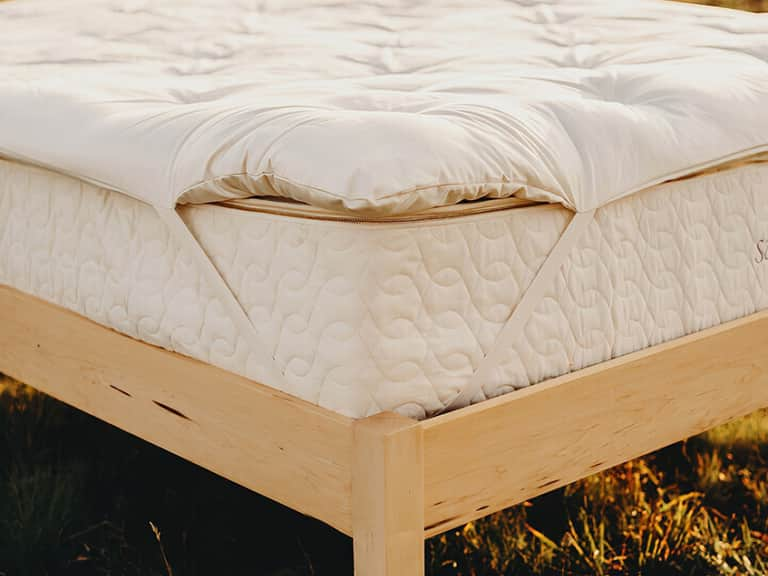
“Firm” can be difficult to judge by touch alone. An adult may associate comfort with a yielding mattress or a padded topper; infants need a different kind of sleep surface. Do not add a soft topper, mattress pad, comfort layer, or other product that changes the intended surface unless it is specifically permitted by current safety guidance and the mattress and crib manufacturers. In particular, adult mattress toppers are not appropriate crib bedding.
Check the assembled sleep space for stability and condition. The mattress should sit securely on the crib support, and the crib should be assembled according to its instructions. If any part is damaged, missing, or difficult to secure, do not improvise with replacement parts or padding. Consult the manufacturer and current safety recommendations.
The mattress label and documentation can help clarify the product’s intended use, dimensions, care instructions, and any relevant safety information. Keep those details accessible rather than relying on a retailer description or a secondhand seller’s memory. If the mattress is used, confirm that it is intact, clean, the correct size, and compatible with the crib before use.
Choose a fitted crib sheet that stays in place
The sheet is the bedding item that belongs on the crib mattress. It should be made for the mattress dimensions and fit tightly, with elastic that holds the corners securely. After making the crib, run a hand over the surface and check each corner: the fabric should lie smooth and should not slide off or gather into loose folds.
Standard crib mattresses are often made to common dimensions, but a label saying “crib sheet” does not guarantee that a particular sheet fits every mattress. Measure or check the mattress specifications, then compare them with the sheet’s stated fit. A sheet that is too small may pull free; one that is too large can wrinkle or loosen. Neither is a substitute for a properly sized product.
Keep spare fitted sheets within reach for ordinary changes, but store them outside the crib. It can be useful to have a clean replacement ready after laundry or a spill. The extra sheet belongs in a drawer or changing area until needed, not folded beside the baby.
For a practical check, make the bed as directed and gently tug each corner. If the elastic releases, the sheet creeps up, or fabric lifts away from the mattress, choose a better-fitting sheet. Recheck the fit after laundering, since repeated washing and drying can affect fabric and elastic over time.
Fabric feel: what to consider
Crib sheets come in materials such as cotton, organic cotton, and cotton blends. Weave and construction can influence how a fabric feels, how it handles repeated washing, and how it wears. Percale, for example, is a woven cotton fabric often described as crisp; other cotton constructions may feel smoother or more textured. No particular fabric choice makes an unsafe sleep setup safe, and a premium material does not replace correct fit.
Some families prefer organic cotton. If that is important to you, look for clear information about fiber content and the scope of any certification rather than relying on broad phrases such as “natural” or “eco-friendly.” Certifications can provide information about specified production or processing standards, but they should not be treated as proof that a product prevents allergies, improves sleep, or reduces health risks. Read what the certification actually covers.
Consider how the material feels against your hand, whether its care instructions suit your household, and whether the sheet remains secure after washing. A smooth, durable sheet that fits correctly and can be cleaned as directed may be more useful than a delicate option that is difficult to maintain. Fabric preference is personal; safety requirements are not.
Claims about temperature regulation, hypoallergenic properties, or special health benefits should be approached carefully. A textile may have characteristics that affect comfort for an adult, but product language is not a substitute for infant sleep guidance or medical advice. If a baby has a diagnosed skin condition or another health concern, ask a healthcare professional what materials and care practices are suitable.
Care that supports a clean, ready-to-use crib
Babies can make laundry feel like a constant cycle. A simple care routine can make the sleep space easier to maintain without adding unnecessary products. Follow the sheet and mattress manufacturers’ care instructions, including recommended water temperature, detergent guidance, drying method, and any warnings against bleach or high heat. Incorrect care can damage elastic, shrink fabric, or shorten its useful life.
Wash new sheets before first use if the care label permits, and clean them again as needed after ordinary messes. Store clean bedding in a dry place. If a fitted sheet becomes stretched, torn, or difficult to secure, replace it rather than trying to pin or tie it into place.
Protective covers and mattress pads deserve particular attention. Products that add cushioning, alter firmness, create gaps, or are not specified for the crib and mattress can change the sleep surface. Before using any cover, verify that it is permitted by current guidance and compatible with the mattress and crib manufacturer’s instructions. A standard adult mattress pad is not a crib-safe substitute simply because its dimensions appear close.
For cleaning the mattress itself, follow its care label. Avoid soaking it or adding unapproved layers to mask stains or odors. If the mattress is damaged, has a persistent contamination problem, or no longer fits securely, seek manufacturer guidance about whether it can be cleaned or should be replaced.
Keep loose bedding and soft objects out
Blankets, quilts, comforters, pillows, stuffed toys, loose cloths, and bumper pads can clutter a crib and create hazards. They may look familiar from an adult bed, but infants should sleep in a clear space. Decorations can be placed outside the crib area, where they cannot fall or be pulled into the sleep space.
Do not use positioners, wedges, or products intended to hold a baby in a particular posture unless a healthcare professional has specifically advised a medically appropriate option. Avoid relying on products that claim to prevent a problem by creating a soft or inclined surface. For safe-sleep decisions, consult up-to-date recommendations from trusted health authorities rather than promotional claims or social media trends.
Dress the baby appropriately for the room and follow health-authority guidance on sleep clothing. If wearable blankets or other garments are being considered, check current recommendations and product instructions carefully. They are not a reason to add loose blankets to the crib. Caregivers should also be alert to signs that the infant is too warm and seek professional advice when concerned.
As a practical habit, make a quick visual check of the crib before each sleep: the mattress is flat, the fitted sheet is secure, and nothing else is inside. A clear sleep area is easier to inspect and maintain than one filled with accessories.
How to read bedding labels and certifications
Labels can help families compare materials and understand how an item should be cared for. Look for specific details: fiber content, dimensions, washing instructions, intended use, and any certification information. If a description uses terms such as “organic,” “chemical-free,” or “hypoallergenic,” look for supporting details and understand the limits of the claim.
Organic certifications apply to defined standards and supply-chain steps. A certification may relate to the fiber, processing, or other criteria, depending on the program. It does not automatically mean that a product has been tested for every possible substance, that it is suitable for every infant, or that it changes safe-sleep requirements. Treat certification as one piece of product information, not a clinical endorsement.
Likewise, “breathable” can describe a material feature, but it should not be understood as permission to use loose fabric, add a topper, or place a baby on a non-flat surface. Keep claims in their proper context: the sheet must fit, the mattress must be firm and flat, and the crib must stay free of loose bedding and soft objects.
When product details are vague, contact the manufacturer or choose an item with clearer specifications. Retail descriptions sometimes condense important information, so the sewn-in label and official care documentation may be more useful once the product arrives.
A short checklist for choosing crib bedding
- Confirm that the crib mattress is firm, flat, and intended to fit that crib.
- Choose a fitted sheet specified for the mattress dimensions.
- Check that all sheet corners stay secure and the fabric lies smooth.
- Review fiber content, care instructions, and certification details if relevant to your preferences.
- Wash and dry bedding according to its label; replace items that no longer fit or are damaged.
- Keep pillows, quilts, blankets, toys, bumpers, and other loose objects out of the crib during sleep.
- Consult current guidance from trusted health authorities and the baby’s healthcare professional when questions arise.
This checklist is not a substitute for current infant sleep recommendations. Guidance can be updated as evidence and standards evolve, so use authoritative, current sources rather than relying on older advice, product marketing, or rules of thumb passed along without context.
When the setup changes
A nursery is not static. Sheets are washed, mattresses are moved, and a crib may be reassembled or adjusted. Whenever the setup changes, revisit the manufacturer’s instructions and check that the mattress remains correctly positioned and securely fitted. A once-snug sheet may loosen with wear, and a mattress that fit one crib may not fit another.
If using a secondhand crib or mattress, take time to verify model information, condition, assembly instructions, and applicable safety notices. Do not assume that an item is suitable because it looks sturdy or was used safely in another home. If you cannot confirm its safety or compatibility, consult an appropriate authority or choose a product with verifiable instructions.
Caregivers may have different habits and levels of familiarity with infant sleep guidance. A simple shared rule helps: every sleep begins with a clear crib, a flat, firm mattress, and a fitted sheet that stays in place. Keep extra bedding nearby but outside the sleep space, and make sure everyone caring for the baby understands the same routine.
The quieter kind of preparation
Nursery planning often invites the addition of one more layer: a softer pad, a decorative cushion, a blanket placed just so. But a safe crib is defined less by what it contains than by what has been left out. A well-fitting sheet, a mattress made for the crib, and a consistent care routine are practical foundations.
Families can still make thoughtful choices about fabric, sourcing, and laundry. Organic cotton or another preferred material may suit household priorities, provided the sheet fits securely and is cared for as directed. What matters most is keeping those decisions within the boundaries of current infant sleep guidance.
For the latest recommendations, consult trusted health authorities such as the American Academy of Pediatrics and public health agencies, and speak with the baby’s healthcare professional about individual circumstances. This article provides general information, not medical advice. When an instruction on a product conflicts with current health guidance, seek clarification from a qualified professional before using it.
In a nursery, simplicity is not a lack of care. It is care made visible: a clean surface, a secure sheet, and a crib prepared for sleep without unnecessary layers.